Ford Claims Battery Breakthrough for Cheaper, Longer-Range EVs, Experts Skeptical
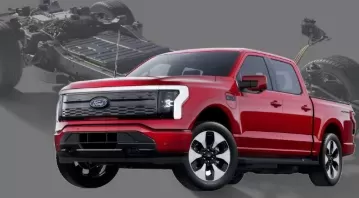
Ford Motor Company claims a significant advancement in battery technology could soon make electric vehicles more affordable and capable of traveling farther on a single charge. While details remain sparse, the automaker positions its new Lithium Manganese Rich (LMR) battery chemistry as a potential game-changer.
Charles Poon, Ford's director of electrified propulsion engineering, announced the development, stating LMR batteries are moving beyond the lab phase. Ford is already producing second-generation LMR cells at its Ion Park facility in Michigan and aims to integrate them into future vehicles before the decade's end.
"This marks a pivotal moment," Poon declared on LinkedIn, highlighting potential advantages. Ford asserts LMR offers safety and stability comparable to lithium iron phosphate (LFP) batteries, while potentially exceeding the energy density of high-nickel chemistries – a key factor for longer driving range. Crucially, Ford is targeting costs significantly below current mid-nickel batteries.
Not Entirely New Ground
However, battery experts note that lithium manganese batteries themselves aren't novel. Sam Abuelsamid of Telemetry Insights pointed out that early models like the Chevrolet Volt used manganese spinel cathodes. Manganese offers key benefits: it's abundant, inexpensive, and inherently more stable than nickel-based batteries, reducing thermal runaway risks. Startups like Our Next Energy are also actively developing manganese-based solutions.
The challenge historically has been voltage decay and a shorter charge cycle life for some manganese formulations. Ford spokeswoman Emma Bergg clarified that their LMR development specifically addresses these issues without sacrificing energy density. While this suggests progress, experts remain cautious without concrete technical specifics.
"'Directly addressing' doesn't sound like they've 'found a solution,'" observed Sam Fiorani of AutoForecast Solutions. "It sounds like getting better and working toward an eventual producible solution." He emphasized that EV battery technology remains young compared to internal combustion engines, with many improvements expected over time.
Driving Down Costs and Ethical Concerns
Lowering battery costs is critical for Ford. Batteries represent at least a third of an EV's price tag. Achieving true cost parity with gasoline vehicles is seen as essential for mass adoption. Ford Chair Bill Ford has consistently stressed the need for greater EV affordability as the key catalyst for wider consumer uptake.
A significant potential benefit of LMR is reducing or eliminating cobalt. This expensive mineral is often linked to unethical mining practices, including child labor. While not a battery chemistry expert, Morningstar analyst David Whiston noted that moving away from cobalt towards more abundant elements like manganese could lower costs and address human rights concerns.
Broader Industry Context
Ford's announcement arrives amidst intense global competition in battery innovation. Chinese giant CATL, the world's largest EV battery supplier, recently claimed its own technological advances will yield cheaper, lighter, faster-charging, and cold-resistant batteries within a few years, promising significant range improvements.
Ford currently sells the Mustang Mach-E, F-150 Lightning, and E-Transit van, reporting an 11.5% increase in EV sales for Q1. While LMR batteries show promise for making EVs more practical and affordable replacements for gasoline cars, experts like Fiorani advise patience, stressing that overcoming voltage decay and cycle life limitations are major hurdles. Ford's LMR development represents a significant step, but the full journey towards cheaper, longer-range EVs for all is still unfolding.